
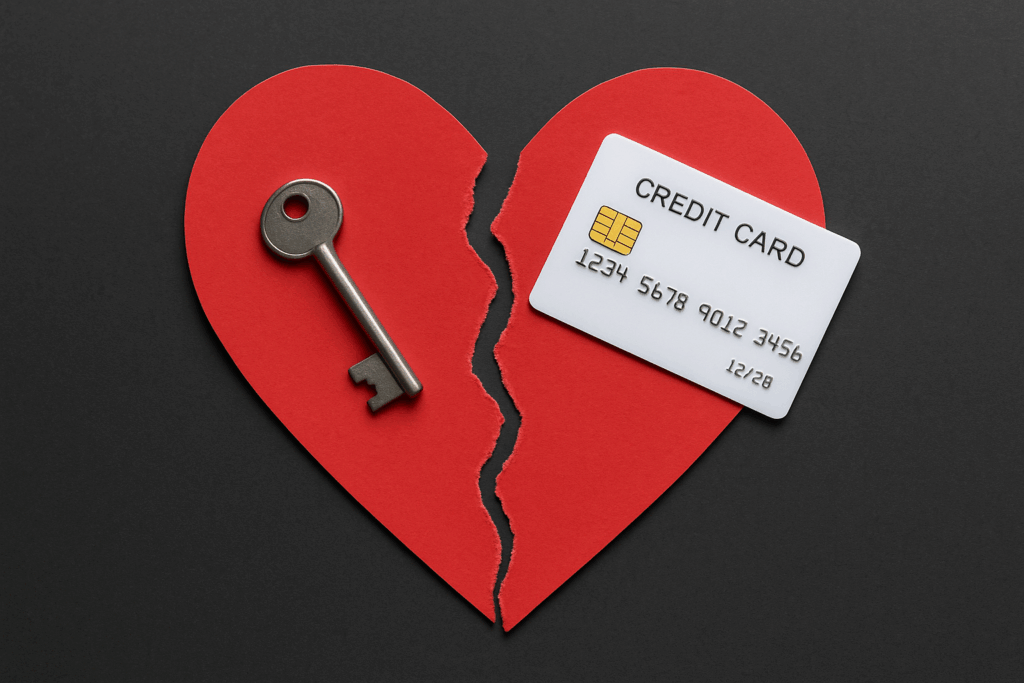
Most couples imagine splitting their assets when they divorce—house, savings, maybe retirement accounts. But what many don’t realize is that dividing debt can be even more complicated than dividing property. And those debts can outlast love because they can keep you financially tied for months or years. Credit cards, car loans, and mortgages don’t care about your marriage status. And while a divorce decree can say who is “responsible” for paying which bills, it doesn’t stop creditors from coming after either of you if the account was joint.
That’s why how you handle debt during divorce matters just as much as how you handle assets.
Joint vs. Individual Debt Under Illinois Law
In Illinois, debts, just like property, are divided into two categories: marital and non-marital.
- Marital debt includes anything you or your spouse took on during the marriage, regardless of whose name is on it. These are the debts that can far outlast love.
- Non-marital debt includes loans or obligations that belonged to one of you before the marriage or after you separated. Often, these are debts that existed before marriage and student loan debt.
The key takeaway? Even if only one spouse’s name is on the credit card or loan, if the charges were made during the marriage for marital purposes (groceries, furniture, family expenses), the court can treat it as marital debt and divide responsibility.
The Hidden Trap of “Joint” Debt
A lot of couples assume that once the divorce decree assigns a debt to one person, they’re free and clear. Unfortunately, creditors don’t see it that way. If both names are on a credit card, loan, or mortgage, the lender can pursue either person if payments stop. That’s because your agreement with the bank is separate from your divorce judgment. Even if your ex agrees (or is ordered) to pay the bill, you’re still legally responsible if they don’t.
So if your name is still on that account, a missed payment can hurt your credit score, increase your debt-to-income ratio, and even trigger collection efforts.
Common Examples in Illinois Divorces:
- Credit Cards: If the card is joint, both parties remain liable. If it’s in one person’s name but used for marital expenses, the balance is often divided in the divorce. Best option: Close or freeze joint accounts during the divorce and, if possible, transfer balances to separate cards when finalizing the settlement.
- Car Loans: If both names are on the loan, the lender can repossess the car or pursue both parties for payment—even if one keeps the vehicle. Best option: Refinance the car loan into the name of the person keeping the car. It’s cleaner and protects both sides.
- Mortgages: Mortgages are almost always joint, and they’re often the trickiest. If one spouse stays in the home, that person should refinance the mortgage in their sole name as part of the final divorce agreement — even if that happens a few years later. Otherwise, the spouse who moves out remains on the hook for payments, even years later.
Why Fighting Over Debt Rarely Pays Off and Will Make it Outlast Love
I’ve seen couples spend months and thousands of dollars arguing over who should pay a $3,000 credit card. The legal fees alone can exceed the balance. And the emotional toll lasts even longer. Litigation is expensive because it adds up fast: attorney fees, discovery, hearings, continuances. Meanwhile, interest keeps running on the very debt being argued about.
That’s why a cooperative, uncontested approach is almost always the smarter financial choice.
If you can sit down, look at the full picture, and make fair tradeoffs. maybe one person takes a credit card balance while the other keeps the car. In the long run, you’ll save yourselves both money and stress.
The Power of a Written Agreement that Outlasts Debt
A good divorce settlement doesn’t just say who will pay which debts. It also explains how. A clear written plan can include:
- When payments are due and for how long.
- What happens if one person misses a payment.
- Whether refinancing or balance transfers will occur by a certain date.
- Who will be responsible for removing the other’s name from accounts.
Having these details in writing avoids future misunderstandings—and gives you a clear record if something goes wrong later.
Protecting Your Credit After Divorce
Even after the decree is entered, keep an eye on your credit. You’re still financially linked to any joint accounts until they’re closed or refinanced. Here are a few quick steps to protect yourself:
- Pull your credit report from all three major bureaus after the divorce.
- Dispute any errors or accounts you no longer own.
- Monitor joint debts until you confirm they’re fully paid or refinanced.
- Don’t co-sign new loans for your ex “just to help out.” It’s never worth the risk.
- Consider freezing your credit.
Your credit will be one of your most valuable tools as you rebuild financially after divorce—protect it carefully.
How Flat-Fee, Uncontested Divorce Helps
When you and your spouse can work together, you can create a fair, realistic plan for dividing debt without adding to it. Through a flat-fee uncontested divorce, you can:
- Review all debts and decide who will pay what.
- Build repayment or refinancing terms directly into your agreement.
- Avoid unnecessary court battles and hourly fees.
- Move forward faster, with less stress and complete transparency. You’ll spend less arguing about who owes what—and more time setting up your financial future.
A Final Thought
Debt doesn’t have to be the thing that keeps you tied to your ex or outlast the love you once had. With clear agreements and cooperation, you can each walk away with a clean slate. The key is understanding that dividing debt in a divorce is about responsibility, not just fairness—and that every hour spent fighting about it usually costs more than it’s worth.
If you and your spouse can cooperate, I can help you create a fair, transparent plan for debt division without turning it into another source of conflict. I offer flat-fee uncontested and negotiated divorces for clients throughout the Metro East area—including Madison, St. Clair, Monroe, Washington, Clinton, Macoupin, and Jersey Counties.
You can schedule a free phone consultation to learn how we can build a simple, affordable plan that protects your finances and your peace of mind.

(618) 726-2671

O'Fallon Office